
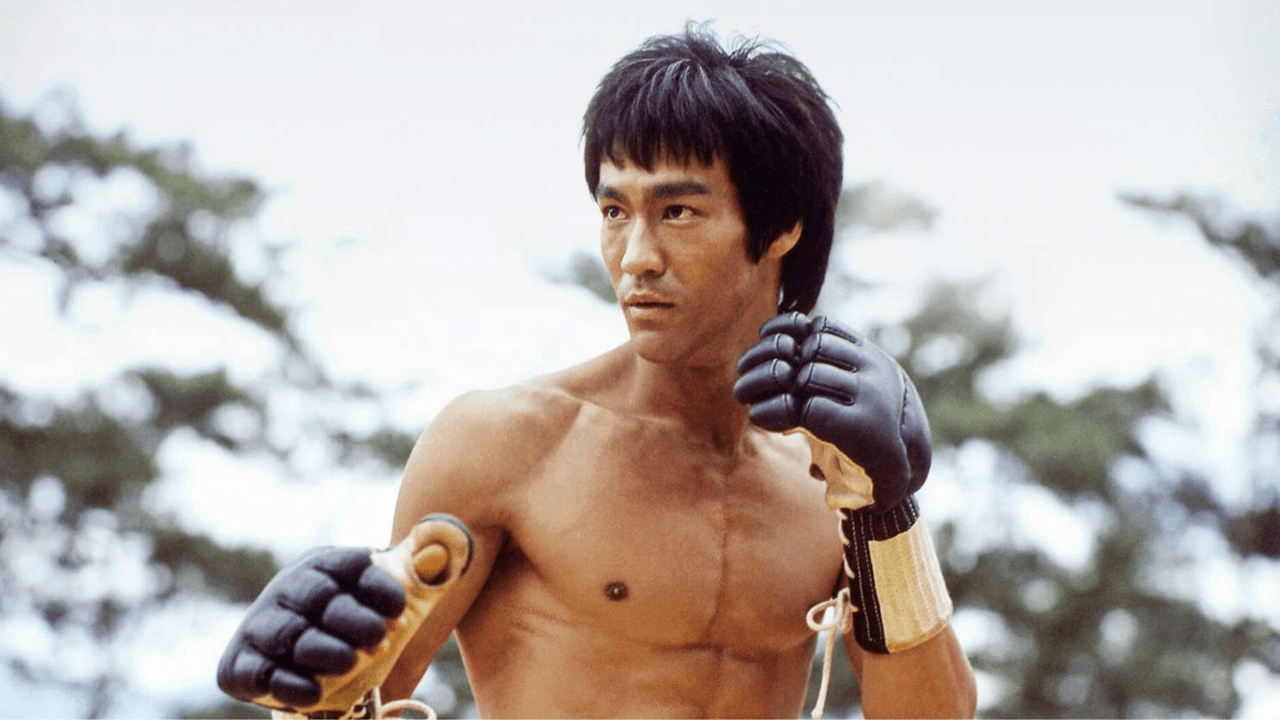
Bruce Lee was never interested in following the path laid out before him. He was interested in creating his own.
A revolutionary thinker, a relentless athlete, a filmmaker, and a philosopher, Lee built his life around one fundamental belief: growth comes from exploration. Whether he was challenging centuries-old martial arts traditions, redefining what a leading man could look like in Hollywood, or studying the connection between the mind and body, Bruce Lee was always searching for something beyond conventional limits.
Today, he is remembered as one of the most influential martial artists in history; a global icon whose impact extends far beyond the fight world. Behind the legendary kicks, the lightning-fast strikes, and the mythology surrounding “The Dragon” was a more complex individual: a man fascinated by human potential, consciousness, and unconventional approaches to performance and recovery.
Long before cannabis conversations entered professional sports, wellness communities, and mainstream culture, Bruce Lee was exploring the plant as part of his own personal journey.
Born on November 27, 1940, in San Francisco and raised in Hong Kong, Bruce Lee became a cultural phenomenon unlike anything the world had seen. Introduced to the entertainment industry as a child actor through his father, Lee Hoi-chuen, Lee’s early exposure to film would eventually merge with his passion for martial arts to create something entirely new.
His martial arts journey began with Wing Chun under legendary instructor Ip Man before expanding into boxing, tai chi, fencing concepts, and other combat disciplines. Rather than accepting traditional martial arts systems as complete, Lee believed fighters should absorb what worked and discard what did not. That philosophy became Jeet Kune Do — a revolutionary approach built on adaptability, efficiency, and personal expression.
His influence exploded globally through films including The Big Boss, Fist of Fury, The Way of the Dragon, and Enter the Dragon. Lee transformed martial arts cinema, challenged Hollywood stereotypes, and introduced audiences around the world to a new vision of athleticism, discipline, and physical mastery.
He was not simply an actor who played a fighter.
He was a fighter who changed the way the world understood movement.
What made Bruce Lee different was that his pursuit of excellence extended far beyond physical strength. He was obsessed with understanding the relationship between the body, the mind, and personal evolution.
His training methods were legendary. He pushed his body to extraordinary levels, developed innovative conditioning techniques, studied nutrition, and approached fitness with the same curiosity he applied to martial arts. He was known for incredible feats of strength and control, including his famous one-inch punch and two-finger push-ups, accomplishments that helped build his reputation as someone operating years ahead of his time.
But the public often remembers only the warrior.
The deeper story is that Lee was also a philosopher — someone constantly experimenting with ideas, perspectives, and experiences that could expand his understanding of himself and the world around him.
That curiosity extended into cannabis.
Accounts from friends, training partners, and biographies exploring Lee’s life reveal that cannabis and hashish were part of his personal experimentation during the late 1960s and early 1970s. Unlike the stereotypes often associated with cannabis use at the time, Lee approached it through the same lens he applied to everything else: curiosity, awareness, and exploration.
He reportedly viewed cannabis as something that could alter perception and increase his sense of awareness. For Lee, the experience was not about abandoning discipline; it was about examining consciousness and understanding different states of the mind.
That perspective was consistent with the philosophy that guided his entire life. Lee believed that mastery came from knowing oneself. Whether through martial arts, meditation, philosophy, or physical training, his mission was always the same: to discover what was possible.
Cannabis was only one element of Lee’s broader approach to managing his body and mind. His success was built on discipline, innovation, and an unmatched work ethic. However, his willingness to explore alternative methods during a time when cannabis carried immense stigma reflected something fundamental about who he was.
Bruce Lee was always willing to question what others accepted.
The most fascinating part of Bruce Lee’s cannabis connection is not simply that he used it. It is that it challenges the simplified version of the man that history often presents.
The world created an almost mythical image of Lee: the perfect warrior, the unstoppable athlete, the disciplined machine. But the real Bruce Lee was far more interesting. He was human. He experimented. He questioned. He evolved. He embraced aspects of counterculture, studied philosophy from different traditions, and searched for knowledge wherever he could find it. The same man who broke down barriers in martial arts was also breaking down assumptions about performance, recovery, and personal development.
Today, professional athletes across the world openly discuss recovery methods, mental wellness, mindfulness, and alternative approaches to optimizing performance. The conversation around cannabis and sports has evolved significantly, with more research examining potential applications related to recovery, relaxation, and overall wellness.
Bruce Lee was having a version of that conversation more than five decades ago. Not because cannabis made him successful. But because curiosity did.
Bruce Lee’s legacy has never been about one punch, one movie, or one philosophy. His true impact comes from the questions he encouraged people to ask.
Can we become better?
Can we challenge tradition?
Can we discover something new?
The Dragon’s greatest weapon was never his physical ability. It was his willingness to explore beyond the obvious.
He changed martial arts by refusing to stay inside the boundaries created before him. He changed cinema by refusing to accept stereotypes placed upon him. And through his own journey of self-discovery, he showed generations of athletes, creators, and innovators that evolution requires an open mind.
Before athletes searched for every possible advantage, before wellness became a global conversation, and before cannabis entered mainstream discussions around performance and recovery, Bruce Lee was already asking the questions that others were afraid to ask.
The legend of Bruce Lee was built through discipline.
His revolution was powered by curiosity.
Sports Cannabis
Join the Movement. Change the Narrative. Break the Stigma.
Toronto, Ontario
Canada

