

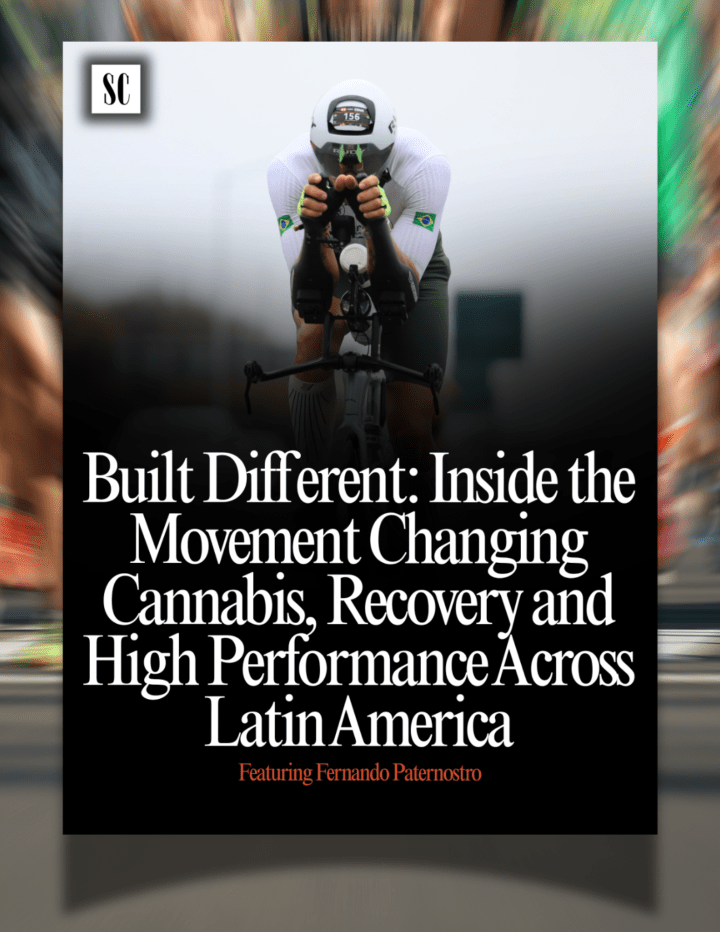
Featuring Fernando Paternostro | Interviewed and Written By Jai Morzaria
Game Changers: The future of cannabis in sport will not be shaped by controversy; it will be shaped by evidence. Across the globe, a new generation of athletes is redefining what high performance looks like while challenging decades of misconceptions surrounding cannabis. Few embody that movement more than Brazil’s Atleta Cannabis founder, Fernando Paternostro, whose work sits at the intersection of endurance athletics, scientific education, and responsible cannabis advocacy.
As both an accomplished Ironman triathlete and one of Latin America’s leading cannabis educators, Paternostro has created a platform dedicated to translating complex scientific research into practical knowledge for athletes, physicians, patients, and industry leaders. Rather than relying on opinion or ideology, his mission is rooted in transparency, education, and evidence-based discussion, helping reshape how cannabinoids are viewed within modern sport.
A two-time Ironman finisher, fourteen-time Ironman 70.3 finisher, and one of Brazil’s leading endurance athletes, Fernando has built his reputation over thousands of kilometres of swimming, cycling, and running. His endurance résumé reached new heights in 2025 when he completed every official Ironman race held across Brazil, an achievement reserved for only a handful of athletes earning the highly coveted Warrior Trophy. A sub-five-hour performance at Ironman 70.3 Monterrey further reinforced Paternostro’s status among Brazil’s top endurance athletes. But perhaps his most significant achievement isn’t measured by race results or podium finishes, it’s the movement he has cultivated through education and evidence-based advocacy.
While much of the global conversation surrounding cannabis continues to be driven by politics, perception, and decades-old stereotypes, he has quietly dedicated his career to something far more sustainable: education. Through Atleta Cannabis, one of Latin America’s most respected platforms focused on cannabis and athletic performance, Fernando is helping athletes, physicians, researchers, and healthcare professionals navigate one of sport’s fastest-evolving conversations using one principle above all else: evidence.
His work doesn’t ask people to believe in cannabis.
It asks them to believe in science.
From Ironman finish lines to emerging cannabinoid research, this conversation demonstrates why meaningful progress happens when curiosity, evidence, and lived experience come together.

Fernando Paternostro:
“My name is Fernando Paternostro. I am a Brazilian entrepreneur, endurance athlete, and cannabis educator. I have completed multiple Ironman and Ironman 70.3 races, including every official Ironman event held in Brazil during the 2025 season. I am the founder of Atleta Cannabis, a science-based platform dedicated to exploring the relationship between cannabinoids, human performance, recovery, and health. My work focuses on translating scientific evidence into practical knowledge for athletes, patients, healthcare professionals, and the broader public.”
Jai Morzaria: You’ve built a reputation as both an elite endurance athlete and a science-driven educator in the cannabis space. How would you personally define your mission at this intersection of sport, health, and cannabis education today?
Fernando Paternostro:
“My mission is to bridge the gap between science, sport, and cannabis education. There is a tremendous amount of misinformation surrounding cannabis, especially in athletic environments. I want to help create a more evidence-based conversation, where decisions are guided by data, not ideology. Whether someone is an elite athlete, a recreational exerciser, or a patient looking for better quality of life, they deserve access to reliable information.”
JM: Before Atleta Cannabis existed, you were already competing at a high level in triathlon. What initially drew you into endurance sports, and what has that journey taught you about discipline, resilience, and human performance?
Fernando Paternostro:
“What attracted me to endurance sports was the challenge of discovering where my limits actually were. Triathlon is unique because it constantly exposes weaknesses. You cannot hide from them. Over the years, the sport taught me that discipline is far more important than motivation. Motivation comes and goes, but consistency is what creates performance. Endurance sports also taught me that resilience is not about enduring suffering endlessly. It is about adapting, learning, and continuing to move forward despite setbacks.”
JM: Completing every official Ironman in Brazil during the 2025 season is a rare achievement. What was the physical and mental cost of that challenge, and how did it reshape your understanding of your own limits as an athlete?
Fernando Paternostro:
The physical cost was significant, but the mental cost was even greater. Recovery became almost a full-time responsibility. Every training session, meal, hour of sleep, and recovery strategy mattered. What surprised me most was realizing that the body is often capable of more than the mind initially believes. The experience reshaped my understanding of limits. Many of the limits we perceive are actually protective mechanisms rather than true physiological barriers.
JM: At what point in your athletic career did you begin to see a connection between cannabis, recovery, and performance?
Fernando Paternostro:
Initially, my interest was not performance enhancement. It was recovery. Like many endurance athletes, I was constantly looking for ways to improve sleep quality, reduce perceived soreness, manage anxiety, and recover more effectively between training blocks. The turning point came when I realized there was a major disconnect between what athletes were experiencing, what patients were reporting, and what the scientific literature was beginning to investigate. That gap made me want to study the topic more deeply and document my own experiences in a structured and evidence-based way.
JM: As someone who actively tests and documents cannabinoid use in real-world endurance conditions, how do you separate personal experience from scientific evidence?
Fernando Paternostro:
This is one of the most important principles behind my work. Personal experience generates hypotheses, not conclusions. If I notice a change in sleep, recovery, or anxiety after using cannabinoid, that observation becomes a question rather than proof. Then I look at the literature, clinical trials, mechanistic studies, and expert consensus to see whether the evidence supports what I observed. Anecdotes can be valuable starting points, but they should never replace scientific evidence.
JM: Within high-performance triathlon culture, where precision and marginal gains matter, is cannabis still misunderstood, and how is cannabis currently perceived?
Fernando Paternostro:
In many athletic circles, cannabis is still viewed through outdated stereotypes. People often associate it exclusively with recreation, impairment, or lack of motivation. That perception ignores the complexity of the endocannabinoid system and the growing body of research investigating cannabinoids for sleep, pain management, anxiety, inflammation, and recovery.
JM: Is there a growing acceptance?
Fernando Paternostro:
Absolutely. The conversation has changed significantly over the last decade. More athletes, coaches, physicians, and researchers are willing to engage with the topic seriously. The stigma has not disappeared, but curiosity is replacing prejudice. We are seeing a shift from emotional opinions toward evidence-based discussions.
JM: Atleta Cannabis has become one of the most recognized cannabis and sports education platforms in Latin America. What have you created today?
Fernando Paternostro:
Atleta Cannabis has evolved into one of Latin America’s leading educational platforms focused on cannabis and sports. Through social media, educational content, interviews, scientific analysis, and real-world athlete experiences, we have built a community that includes athletes, physicians, healthcare professionals, patients, researchers, and industry leaders.
JM:
What gap in the market or culture did you see?
Fernando Paternostro:
I noticed there was virtually no credible source discussing cannabis and athletic performance in Portuguese. The conversation was either excessively promotional or excessively ideological. There was very little scientific balance. Building trust requires consistency. We focused on transparency, evidence, expert interviews, and openly discussing both the potential benefits and limitations of cannabinoids. Trust is earned when people realize you are willing to follow the science even when it challenges your own assumptions.
JM: You’ve described Atleta Cannabis as being built on science, evidence, and performance. What has been one of the most difficult challenges in maintaining that standard?
Fernando Paternostro:
The biggest challenge is resisting simplification. Social media rewards certainty, controversy, and extreme claims. Science rarely works that way. Most answers are nuanced. The challenge is communicating complexity in a format that remains accessible while maintaining scientific integrity. We have always prioritized accuracy over sensationalism, even when that approach grows more slowly.
JM: From your perspective as both an athlete and educator, do you feel enough is currently being done to advance science-based cannabis education within sport and medicine?
Fernando Paternostro:
No, I don’t believe enough is being done yet. One of the most interesting challenges is that medical cannabis adoption is currently moving faster than the science itself. Patients, physicians, and athletes are already using cannabinoid-based therapies in real-world settings, while researchers are still working to generate the level of evidence required by traditional sports medicine standards.
At the same time, anti-doping regulations are trying to keep pace with this rapidly evolving landscape. The decision by WADA to remove CBD from the Prohibited List was an important milestone. It acknowledged that not all cannabinoids should be viewed through the same lens and opened the door for research and therapeutic use in athletes.
Likewise, the current THC threshold represents a significant evolution compared to previous policies, recognizing the distinction between impairment and residual exposure. What I find particularly compelling is the emerging concept that cannabinoids may function as indirect ergogenic agents. Rather than directly enhancing performance during exercise, cannabinoids may improve sleep quality, reduce anxiety, optimize recovery, and increase training availability. Better performance then becomes a consequence of better recovery and athlete readiness. Personally, I believe sports organizations should continue reevaluating cannabinoid policies as new evidence emerges. The conversation should move beyond the simplistic question of whether cannabis is “allowed” or “forbidden” and toward a more sophisticated discussion about athlete health, recovery, safety, and competitive integrity.
JM: Looking back, what do you consider your most significant personal milestone so far?
Fernando Paternostro:
Ironically, my most significant milestone is not a race result. It is seeing athletes, physicians, and patients change their perspective after being exposed to high-quality information. Knowing that our work has helped create more informed conversations is more meaningful to me than any medal. Impact lasts longer than performance.
JM: As both your athletic career and Atleta Cannabis continue to evolve, what does the next chapter look like for you?
Fernando Paternostro:
As an athlete, I want to continue competing at a high level while documenting the realities of long- term endurance performance. My main goal is to get a slot in the 70.3 Ironman World Championship and take Cannabis exposure to the maximum level of the ironman experience. As an educator, I want to expand Atleta Cannabis into a truly global platform, connecting athletes, researchers, physicians, and brands through science-based education. The long-term vision is to help establish cannabis education in sport as a legitimate field of study rather than a niche topic.
JM: What does breaking the stigma and normalizing the conversation mean to you?
Fernando Paternostro:
Breaking the stigma does not mean convincing everyone to use cannabis. It means creating an environment where people can discuss the topic honestly, critically, and scientifically. For me, breaking the stigma also means separating cannabis from outdated assumptions within sports. Athletes routinely use recovery tools ranging from nutritional strategies and sleep optimization to physiotherapy, compression technologies, cold immersion, and legal supplementation. If cannabinoids ultimately prove capable of improving recovery, reducing anxiety, enhancing sleep quality, and supporting athlete health without compromising competitive fairness, they deserve to be evaluated under the same scientific standards applied to every other recovery intervention. The goal is not normalization through ideology. It is normalization through evidence.
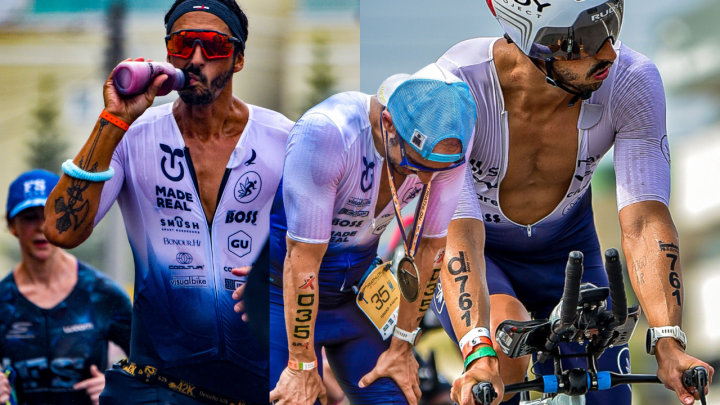
Movements are rarely built overnight. They are built through consistency. Through credibility. Through countless conversations that slowly replace uncertainty with understanding. That is precisely what Atleta Cannabis has become.
What began as one athlete searching for answers has evolved into one of Latin America’s most respected voices exploring the relationship between cannabis, recovery, health, and elite performance. By choosing evidence over sensationalism and education over ideology, Fernando has demonstrated that meaningful progress isn’t measured by viral moments—it’s measured by the quality of the conversations that follow.
As scientific understanding continues to expand and athletes around the world seek better tools to support longevity and recovery, his work will remain at the forefront of one of sport’s most important emerging discussions.
At Sports Cannabis, we believe the future belongs to those willing to challenge outdated thinking with curiosity, integrity, and evidence. Today’s feature is more than the story of an accomplished Ironman. It is the story of a movement that is helping redefine how the world understands cannabis in sport.
This is what a Game Changer looks like.
Sports Cannabis
Join the Movement. Change the Narrative. Break the Stigma.
Toronto, Ontario
Canada

