
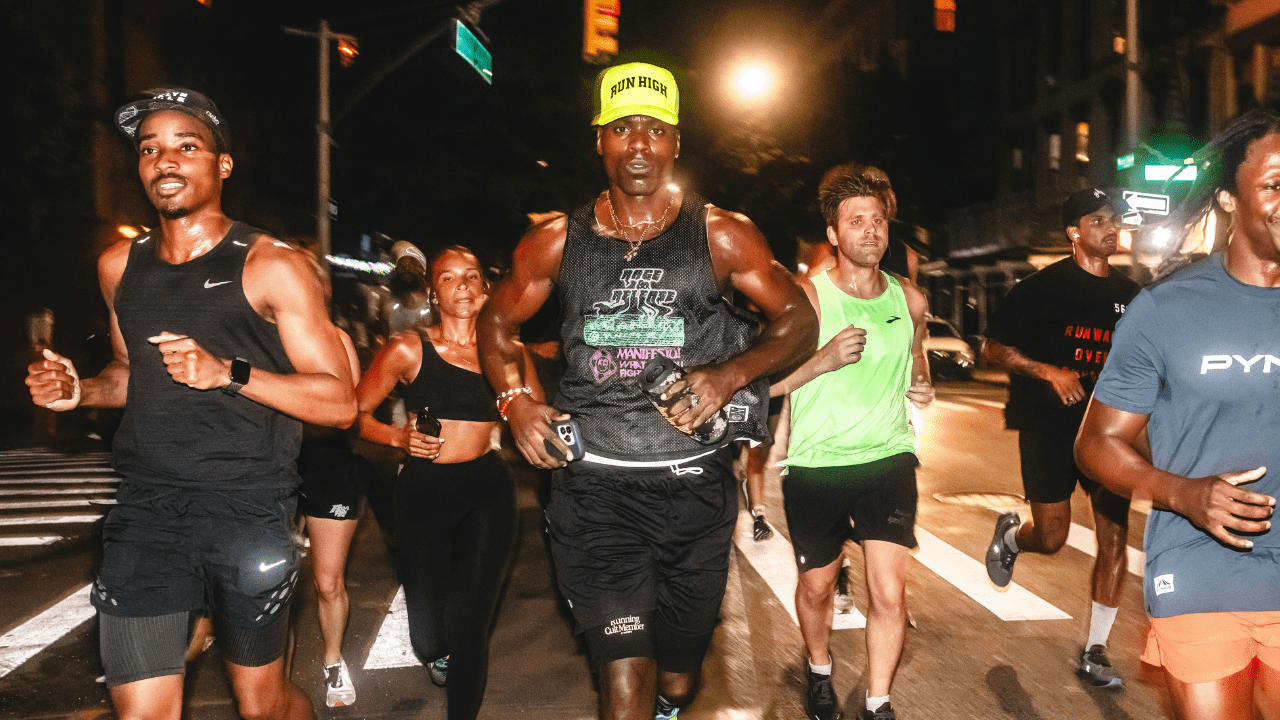
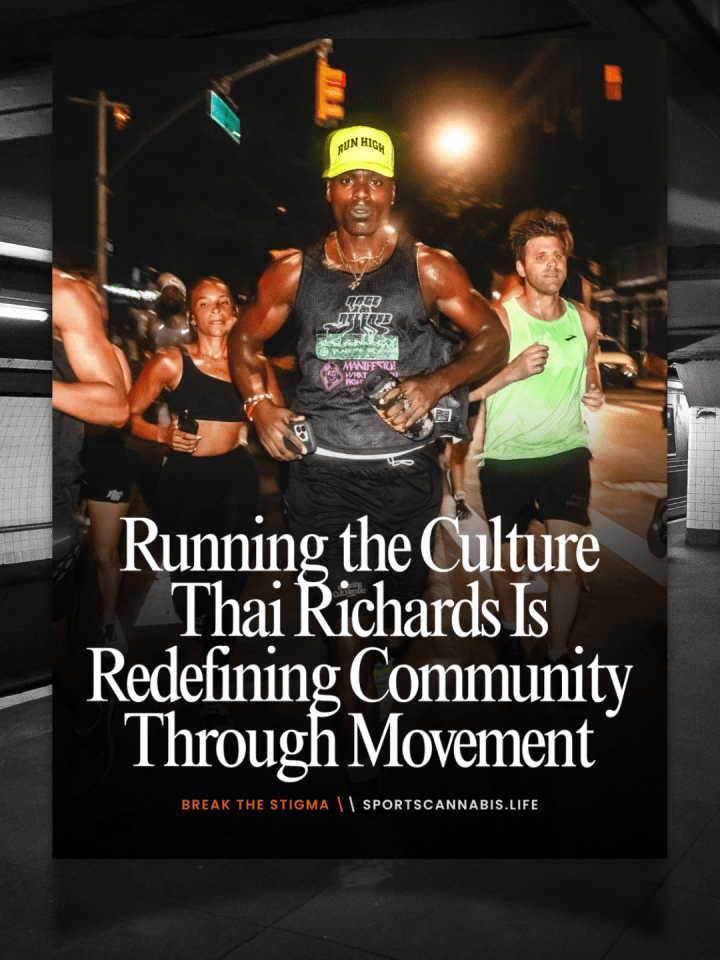
In a time where sport is being redefined by culture as much as competition, Thai Richards is setting the pace for something bigger than miles. Out of Brooklyn, where identity, movement, and expression collide, Richards is helping reshape running into a cultural force, one rooted in community, inclusion, and shared energy. This isn’t about chasing podiums; it’s about creating spaces where people move together, push together, and find connection through every stride. Through his work, running has become a language that bridges backgrounds, uplifts voices, and reclaims the streets as a platform for unity.
A former college football standout turned multidimensional creator, Richards has carved out a unique lane at the intersection of sport, wellness, and culture. His 2025 feat, running every train line across New York City, wasn’t just a physical accomplishment; it was a statement. A reclamation of space. A call to unify a fragmented running culture while uplifting runners of colour and reinforcing inclusivity in one of the world’s most diverse cities. Beyond the pavement, his influence spans modelling, curated wellness experiences, and thought leadership in cannabis and fitness, anchored by a philosophy that challenges outdated narratives and replaces them with informed, intentional living.
For years, the focus has been on athletes who don’t just move within culture; they move it forward. Thai Richards stands firmly in that lineage, carrying a presence that is both grounded and expansive. His voice is calm but intentional, shaped by experience, loss, and a deep connection to community. In this conversation, he opens up about resilience, rediscovery, and the role cannabis plays in supporting performance and recovery. This is more than an interview; it’s a lens into a mindset that continues to redefine how movement, culture, and purpose intersect.
JM:
2025 felt like a defining year for you—running every train line in NYC is no small feat. What did that journey represent beyond the miles?
Thai Richards:
“Running all the train lines in 2025 was about providing an opportunity for me to do something unusual for my city. I feel like so many transplants are coming here to New York and they’re doing amazing things for themselves, but I don’t feel like it’s giving back to the city or generating an inclusive energy. You know what saying?
Running is something to be embraced, to be proud of and something that a whole city can get involved with. For me, it was always more than just running; it’s about the community movement, and unfortunately, that hasn’t been the scene as of late. New York has changed dramatically because the cost of living keeps driving higher.
I wanted to do something unique to embrace the city, uplift runners of colour, and uplift all runners of all backgrounds, because New York City is a special place…”
JM:
When you look back at the season, what moments tested you the most—physically, mentally, or spiritually—and how did you respond?
Thai Richards:
“I’ve been broken in a few different ways. I lost a lot in the past two years, not specifically over one season, but over the course of the two years… Within that time, I lost direction, and the positive energy…
I don’t think there was any season that gave me a hard time… I would say my entire experience over the past two years is what made me realize I had to keep going. I missed the energy and the vibrance of the community… Those moments made me realize I had to come back, I had to overcome, and I couldn’t stop running…”
JM:
You’ve been vocal about the challenges of working with dispensaries. What’s been the “good, bad, and ugly” of navigating the cannabis industry as an athlete-founder?
Thai Richards:
“To be honest with you, the cannabis industry was never really prioritizing wellness, especially in New York, where the culture leans heavily toward money and moving product. I understand it, people have bills, and the cost of living is high. Unfortunately, that focus has come at the expense of quality, experience, and actually giving people what they need.
It’s become difficult to work with dispensaries when you’re thinking about consumption, regulation, and whether customers are getting a safe, intentional experience, especially as potency keeps rising. If you’re not thinking about the customer, then you’re just chasing the same outcome as everyone else, and that’s not what this space should represent.
At the end of the day, it raises real questions about whether these dispensaries truly understand wellness, or if they’re just prioritizing profit over building something that’s actually tried, true, and rooted in healing.”
JM:
Running is evolving—from solo performance to collective movement. How have you seen that shift, and where do you fit within it?
Thai Richards:
“The whole mindset has always been global, never local, and for the past 10 plus years, I’ve seen running becoming what it is now, almost anyone can tap in. You can line up on the same courses as the best in the world, something you don’t get in other sports, and that accessibility makes it powerful… Running gives you something deeper; it brings you back to that pure, almost kid-like feeling while still allowing you to accomplish something that’s fully your own.
After COVID, as nightlife faded and fitness became more personal, people started searching for connection again, and running naturally filled that gap. Now people are realizing it’s about community, culture, fashion, and a space for people to express themselves while navigating their own journey…”
JM:
You often speak about “stop competing, start creating.” What does that look like in practice when building community through running?
Thai Richards:
“The racing scene is pretty crowded right now, and I think the shift needs to move toward something more personal, where people are encouraged to build challenges that actually resonate with them. Of course, chasing personal bests and taking on different races is rewarding, but every mile matters, even the ones that don’t happen on an official course. Not everyone is built for high mileage or the pressure that comes with it, and that has to be understood. For me, it’s about inspiring people to embrace their own path with a sense of freedom and that childlike wonder that first pulls you into running in the first place.”
JM:
Let’s talk about flow state—the runner’s high is real. Where does cannabis enter that equation for you, if at all?
Thai Richards:
“Understanding how to run without cannabis is just as crucial as knowing how it can enhance your experience when used. Being aware of your body in a sober state helps you connect with your natural flow state and runner’s high. Once you’ve established that foundation, you can explore how cannabis may complement your running journey…”
JM:
There’s still stigma around cannabis in performance spaces. From your perspective, what are people still getting wrong?
Thai Richards:
“At the core of it, a lot of this comes down to societal conditioning—people were raised to believe cannabis is a gateway drug. But when you really look at it, cannabis is a natural plant, like mushrooms, and it deserves a more intentional, informed reintroduction into culture. What’s needed now is access to real information and the right influence, especially as athletes in the MLB, NBA, and NFL start openly sharing their experiences and shifting that narrative. That level of visibility matters because conscious representation carries weight and changes perception over time. You still see that legacy today through figures like Bob Marley and the Rasta movement, whose impact continues to echo globally.”
JM:
Rage & Release sits at the intersection of movement, mindfulness, and cannabis. How has that philosophy evolved through your 2025 experiences?
Thai Richards:
“The core philosophy stays the same; we only have one body and one mind, and both need to be taken care of with intention. Like anything, cannabis can create imbalance if it’s misused, and that reality has to be acknowledged.
My vision with R&R has always been to build an ongoing resource that helps people navigate how cannabis, fitness, and self-care can work together in a healthy way. It’s about providing guidance that supports overall well-being, not just isolated habits. At the end of the day, it’s about keeping people aligned with themselves and helping them move with more awareness in how they live and recover…”
JM:
For runners trying to maintain pace—not just physically, but in life—what mindset shifts have helped you stay consistent and intentional?
Thai Richards:
“One of the biggest mindset shifts for me is understanding that you can’t just label running or fitness as therapy. People say that all the time, and while it can be, the real therapy is what you’re doing with your mind while you’re in motion. You can run and still be empty, but when you move with intention and stay aware, that’s where the growth actually happens. It becomes about constant awareness, gratitude, and learning when to push forward and when to step back. At the end of the day, real progress comes from understanding yourself and using that awareness as the foundation for everything.”
JM:
Looking ahead to 2026, what are you building next—and how do you plan to push the culture forward?
Thai Richards:
“When it comes to pushing the culture forward, the biggest thing for me is helping people understand what a healthy cannabis relationship actually looks like. I respect the creativity online, but a lot of what we’re seeing leans into overconsumption and proving a point, and that only feeds into the wrong perception.
For me, it’s about balance, awareness, and being intentional with how we show up, because the message matters more than the moment. I’d rather highlight performance, recovery, hydration, and real lifestyle habits than just consumption for the sake of it.
At the end of the day, we have a responsibility to shape this culture the right way, especially while it’s still evolving, and to be mindful of how it impacts people who are watching and learning from it.”
There’s a quiet authority in the way Thai Richards moves, measured, intentional, and rooted in something deeper than performance metrics. In a landscape often driven by extremes, faster, stronger, higher, he offers something different: balance. Through Rage & Release, he isn’t just building a brand; he’s creating a mindset. One that reframes cannabis not as a crutch or controversy, but as a tool for personal alignment.
What Richards represents is bigger than running, bigger than cannabis, and bigger than any one moment. It’s a cultural shift. A return to self. And in that space, where movement meets mindfulness, he’s not just part of the conversation, he’s helping lead it.
SPORTS CANNABIS
Join the Movement. Normalize the Conversation. Break the Stigma.
Toronto, Ontario
Canada

