
In a move that signals a continued cultural and medical shift across professional sports, the WNBA is on the verge of eliminating cannabis testing under its latest collective bargaining agreement (CBA). The proposed change—surfaced through reporting by ESPN senior writer Ramona Shelburne—positions the league alongside a growing list of organizations rethinking outdated substance policies in favour of athlete health, recovery, and modern science.
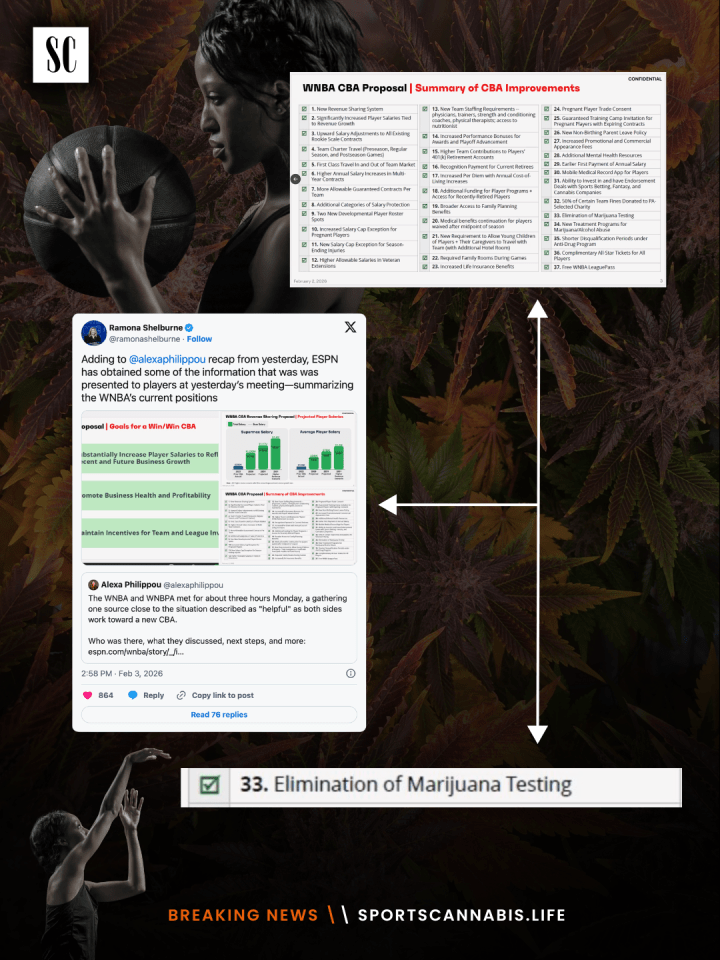
The development emerged after Shelburne shared internal slides presented to players during recent negotiations between the WNBA and the Women’s National Basketball Players’ Association. Among 37 outlined improvements in the proposed CBA, one line stood out: “Elimination of Marijuana Testing.” The inclusion marks a significant compromise from the league, which has historically maintained stricter cannabis policies compared to its NBA counterpart and other major leagues that have already relaxed or removed testing protocols.
Under the current framework, cannabis remains classified as a prohibited substance in the WNBA, with players subject to testing for THC metabolites. While initial violations often result in treatment referrals, repeat offences can escalate to fines or suspensions—policies that critics argue are increasingly out of step with both legalization trends and evolving perspectives on cannabis as a recovery tool. The proposed CBA adjustments also reference new treatment programs for substance use and shorter disqualification periods, signalling a broader shift toward player wellness rather than punishment.
This potential policy change reflects a larger transformation across professional sports, where leagues are beginning to acknowledge cannabis as a viable option for pain management, inflammation, and mental health support. For athletes—many of whom endure gruelling schedules and physical tolls—the removal of cannabis testing could unlock safer, more natural alternatives to traditional pharmaceuticals. It also represents a cultural recalibration, particularly in women’s sports, where advocacy for player rights and holistic health continues to gain momentum.
While the agreement has only been reached in principle and awaits full ratification, the implications are already resonating across the sports and cannabis industries. If finalized, the WNBA’s decision could accelerate similar reforms in other leagues, further dismantling long-standing stigmas and redefining how athlete care is approached at the professional level.
SPORTS CANNABIS
JOIN THE MOVEMENT. BREAK THE STIGMA.
Toronto, Ontario
CANADA
 SPORTS CANNABIS