


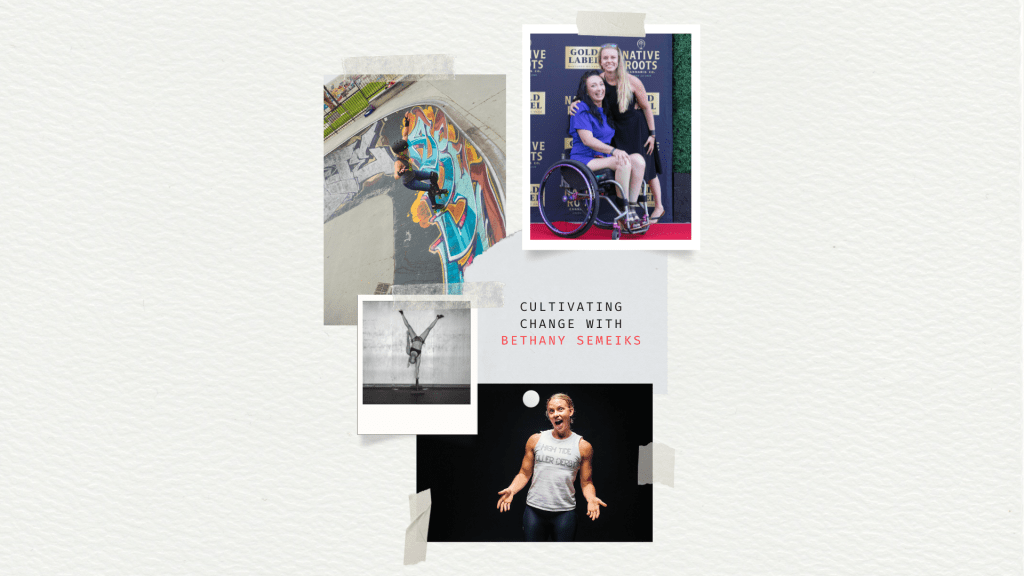
Retired roller derby legend, cannabis educator and industry leader Bethany Semeiks is using her platform to shift the cannabis narrative. A seasoned professional, Semeiks, has an extensive background that includes a Master of Business Administration from the University of California, Irvine and a Master of Science in Cannabis Science and Therapeutics from the University of Maryland School of Pharmacy.
Today, Semeiks is focused on the science behind the plant and has teamed up with Amy Van Dyken for a new show “Terp Tuesday”. Together they are equipping individuals across North America with the tools needed to navigate the ever-changing landscape of cannabis.
At the core of it all, Bethany’s movement is fueled by her passion for health, wellness and advocacy. Using her platform she’s set out to help others pursue alternative natural healing modalities and empower their journeys;
“My name’s Bethany, commonly known as B or B train. Over the past five years, I’ve immersed myself in the cannabis industry. Looking back, it discovered me. My passion lies in natural health and wellness. I want people to understand that there are moments when pharmaceuticals can play a crucial role and I’m not urging anyone to abandon their prescribed medications. I simply advocate for personal empowerment – and want to help others understand what resonates with them. Throughout my journey in the cannabis industry, my focus has been on encouraging self-advocacy, staying educated and helping others familiarize themselves with their body so that they can understand what best suits them. Today, I’m using my platform to speak out about the benefits of superior cannabis products, sharing weekly doses of education on Terp Tuesday with Amy and pushing for transparency on product labels.”
Jay Morzaria
In 2023, you completed a Master of Science in Cannabis Science and Therapeutics from the University of Maryland School of Pharmacy. Talk to us about why you decided to take this on and three key takeaways from the program.
Bethany Semeiks
“I took on this challenge because, being in the cannabis space, I realized there’s a vast amount that I didn’t know. What better way to expand my knowledge than by returning to school? It just so happened that the University of Maryland, where I completed my undergrad, offered a master’s in cannabis through its pharmacy school. I decided to dive in, and the learning experience was incredible. I won’t pretend to know everything; I’m still learning, and with ongoing research, there’s always more to discover.
One of the key takeaways for me is the awareness of how much I didn’t know. I’m committed to continuously making connections and learning from others. I believe in sharing what I learn in an easily digestible way… Especially since traditional medical schools rarely cover the endocannabinoid system. While many healthcare professionals are doing their best to be advocates, there’s still a need to push forward and an opportunity to integrate this vital knowledge.
My second major takeaway is my passion for science. I’m a big nerd and I’m fascinated by how substances interact with the body, whether it’s holistic factors like diet, environment, and hydration or plant-based modalities. For me, the one constant is that it always comes back to being your own advocate and taking charge of your well-being.
Lastly, I’ve come to appreciate the incredible people in the cannabis industry. My school program has brought together a community of supportive individuals, and contrary to some negativity circulating online, I’ve witnessed firsthand that the industry is far from falling apart. From Colorado to Maryland and beyond, there are genuinely remarkable people doing impactful work. Don’t always believe everything you read online; there’s a wealth of positive contributions being made by dedicated individuals who genuinely want to make a difference.”
Jay Morzaria
Is cannabis seen as an opportunity for scientists, researchers and students to explore original research?
Bethany Semeiks
“The answer is both yes and no. Delving into cannabis research requires funding, and here’s the catch: cannabis is still classified as a Schedule I drug defined as a drug with no currently accepted medical use and a high potential for abuse. As far as my understanding goes, there are only four organizations in the United States equipped with the research capacity to delve into weed-related studies. However, securing funds for research is a hurdle in itself. It’s a multifaceted process involving financial backing, finding willing participants, acquiring the product, and deciding how to collect data – be it through a paper or an app.
The intricacies don’t stop there; considerations extend to gaining approval from Institutional Review Boards (IRBs) to conduct proper research, including placebo, blind and double-blind studies. Undoubtedly, Cannabis ranks high among research plants and drugs. However, the lingering roadblocks of Schedule I classification and the financial hurdles attached, constrain our ability to conduct comprehensive studies and produce research that could legitimize cannabis as a mainstream medicine. Despite significant progress made and led by commendable individuals, there’s still much groundwork to cover in order to break down these barriers.”
Jay Morzaria
What advice would you offer others venturing into plant-based modalities?
Bethany Semeiks
“When I first stumbled into the industry, I had no clue about the potency of this plant as it relates to health and wellness. It addresses a range of issues, from pain and sleep to GI problems, anxiety, and depression. However, it’s not a universal cure-all. Integrating it into your health and wellness routine can significantly impact your journey. Understanding that no magic pill fixes everything is essential to everyone’s journey. When you introduce cannabis, cannabinoid therapy, or cannabinoids into your health routine, the difference can be profound. It’s important to be your own advocate, experiment with various options, and acknowledge that some may be more effective than others. If something doesn’t work for you, that’s alright. There’s always the option to explore other avenues. So, persist in trying, advocating for yourself, reading, watching, and absorbing as much knowledge as you can.”
Jay Morzaria
You also have a background in brand development and marketing. Today the landscape is congested with lifestyle cannabis brands, and the ones focused on health and wellness are falling by the wayside. Why do lifestyle brands continue to thrive?
Bethany Semeiks
“It’s all about lifestyle brands; that’s what’s driving sales. During my tenure at NuLeaf Naturals, we emphasized blogs, education, and a specific focus on cannabinoids. However, other brands are capitalizing on selling the mood. Whether it’s targeting pain relief or promoting better sleep, the emphasis is on addressing specific needs. It’s dependent on the brands’ focus and intention with their education from blog posts, social media, conversations, pop-ups, and one-on-one interactions.
Nevertheless, rules and regulations, courtesy of USDA, FDA, DEA, and all the other acronyms govern what can and cannot be said. Contrary to what many think, this is a positive aspect, it prevents misleading claims like asserting cannabis cures cancer. The marketing restrictions exist to uphold consumer safety, as well as maintain honesty and integrity. While there’s a call for more education and stigma reduction, lifestyle brands continue to dominate.
In terms of anecdotal data, customer reviews play a pivotal role. At Nuleaf Naturals, for instance, we amassed around 30,000 customer reviews, offering valuable anecdotal data showcasing what works. Other brands, such as Charlotte’s Web and Medterra, also feature anecdotal data on their websites, highlighting customer experiences which is a great way to incept the market while focusing on health and wellness.
When people express the need for more education, they may also refer to the necessity for more extensive research. While research is crucial, anecdotal data and lifestyle branding are already shaping the industry. The focus is on storytelling, illustrated through customer reviews and personal experiences. The emphasis is not just on showcasing the pain but on presenting the positive transformations.
Drawing parallels with other industries, the supplement sector, for instance, relies heavily on lifestyle marketing. Demonstrating the before and after effects becomes key, emphasizing the transformation without necessarily focusing on the pain itself. This approach aligns with established marketing strategies, adapting to the evolving cannabis landscape. The bottom line is finding comfort in discussing cannabinoids and incorporating them into your lifestyle, regardless of the form it takes.”
Jay Morzaria
It’s the emphasis on intention and positioning the plant for brands, some excel while others fall behind.
Bethany Semeiks
“Absolutely. And then, you know, we can’t start targeting children with epilepsy directly. That’s just not appropriate. However, simultaneously, you can allocate your marketing funds to support organizations like Realm of Caring, where the majority of patients are families with children facing epilepsy. It’s all about being strategic with your marketing budget, deciding where to invest and whom to collaborate with. Strategic partnerships do exist, and it’s crucial to consider how you’re spending your marketing dollars and the narrative you’re crafting for your brand. There’s no room for being tactless in your marketing approach. You can’t claim your product will miraculously cure headaches; it doesn’t work that way. Instead, consider supporting a nonprofit focused on headaches, participate in their events, forge friendships, and strategically build partnerships.”
Jay Morzaria
Today, you’re the GM in Colorado for iKrusher Vape Hardware, which specializes in providing a one-stop vape solution for brands and distributors. In the last three years, there has been a cloud of stigma surrounding vapes, what are your thoughts and what are the key challenges to the vape market?
Bethany Semeiks
“It all boils down to the stigma, most of the time. People often say, “I don’t want to smoke,” which is understandable. Yet, inhalation happens to be the second-fastest way to introduce medicine into your body—the first being through an IV and let’s be realistic; no one is injecting THC through an IV into their bloodstream.
Inhalation, however, provides a practical option. You can wait 15 to 20 minutes, take a hit—call it what you will, “grip it and rip it” or any other term—and now you know exactly what you’re consuming. It offers better control compared to edibles, where you might wait two hours only to realize you’ve taken too much.
What I appreciate about inhalation is the ability to discern the terpene content and ensure you have all the cannabinoids you need. Interestingly, there are pharmacy books that detail which strains are effective for headaches, epilepsy, or neuropathy. This information, backed by actual data and medical literature, guides patients in choosing strains based on specific needs. This stands in contrast to buying an edible without knowing its content and taking it blindly, only to find yourself in a predicament later on.”

Jay Morzaria
I’ve also found that it provides an opportunity to microdose, not everyone has the same tolerance and one puff might be all they need.
Bethany Semeiks
“I’m a one-hit wonder when it comes to smoking weed. Let’s keep it real, we’re all friends here, right? So, personally, I find that when I have flower or a joint, I end up wasting a lot because, after one or two hits, I’m done. But, if I opt for a vape, whether it’s a half-gram, full-gram, or a two-gram cartridge, or even a disposable or pod, it lasts longer, and I don’t have that nagging worry that I’ve wasted it or need to share it with friends.
The beauty of it is, I can control the experience, and I’m familiar with the manufacturers. Being in the cannabis sector, you track everything from seed to sale. You know where the plant was grown, how it was extracted—basically, you know the whole story. Now, on the hemp side, sure, there’s a slightly higher chance it might be subpar, like hot dog water with strange additives. However, when you opt for quality products from reputable companies with transparent practices, where you know their corporate headquarters, you can see the Certificate of Analysis (COA), know their ingredients, and even know the people behind the scenes, that’s when trust comes into play.
So, whether it’s on the cannabis side or the hemp side, trust the vapes to be your companions. At the end of the day, it’s about finding what suits you best and finding the relief with products you can rely on.”
Jay Morzaria
In recent years we’ve seen the NFL awarded $1 Million for studies investigating the effects of cannabinoids on elite football athletes, unfortunately, the process has been slow and little information has been shared. What major obstacles are preventing research from being accomplished?
Bethany Semeiks
“The whole bottleneck right now is the combination of money and Schedule I classification. It’s frustrating. Cocaine is a Schedule II drug because it has been proven to be a local anesthetic for eye surgery. So, the question lingers: why can’t we delve deeper into cannabis research?
The financial constraints tied to the Schedule I designation for cannabis create obstacles. Whether it’s the NFL, whose fans may not be the biggest cannabis enthusiasts or the general population that may still hold reservations about cannabis, we need to keep the conversation going, one conversation at a time. It’s heartening to witness incremental changes, for example, a friend has a Mormon mom now openly discussing weed at church. This shows progress, and it consistently ties back to the hurdles presented by schedule one classification and financial constraints.
The road is gradually clearing, and as we continue these conversations and witness shifts in perspectives, there’s hope for further breakthroughs in cannabis research.”
Jay Morzaria
Are you surprised by the recent stance the NCAA has taken, recommending to remove Cannabis from the banned substance list?
Bethany Semeiks
“It’s perfect timing, and it’s truly exciting because this is where the change is set to unfold – right within the walls of colleges and universities. These institutions are often the epicentres of groundbreaking research, and it’s within the academic realm that transformative shifts are taking place. I’ve observed this, particularly among the younger generations and athletes of today. I’m 43, so I can attest that some of my fellow Gen Xers and boomers still carry certain stigmas. However, the newer generations are rewriting the script. They’re not indulging in excessive drinking; instead, they’re exploring plant medicines and prioritizing their health and wellness. They’re a mindful and vocal bunch, which is precisely what we need to challenge the persisting stigmas and navigate through the remnants of Nixon-era policies in today’s politics.
It’s heartening to witness the younger generations spearheading change. What’s even more reassuring is the shift towards more holistic approaches rather than pumping individuals, especially kids, with potentially questionable pharmaceuticals, even if they are FDA-approved. It begs the question – what are the long-term consequences? As someone who’s been through the collegiate athlete experience, I can’t help but wonder if those shaping NCAA policies ever reflect on the choices they had to make. Do they harbour regrets? Do they wish they had better alternatives or advocates during their playing days? From my perspective, it seems there’s a more humane touch in policy-making now, and that’s something I genuinely appreciate. I hope to see this positive momentum continue because having more compassionate voices influencing policy is truly something to celebrate. I just want to encourage them to keep pushing forward.”
Jay Morzaria
Focused on shifting the narrative, today, you’ve teamed up with your good friend, 6-time Olympic Gold Medalist Amy Van Dyken to create Terp Tuesday, a show focused on education and empowering individuals on their cannabis journey. Can you share the vision and mission that is driving the movement forward?
Bethany Semeiks
“We just want to make a difference, and speaking from my own experience, I’ve found that cannabinoids can be incredibly beneficial for sleep, pain, and anxiety. I know that overwhelming weight in the chest panic feeling, and cannabinoids alleviate that, for me. I can vouch for its effectiveness, and it’s not just for humans – even my older dogs, aged 12 and 13, have been benefiting from CBD morning and night. The impact is tangible, and there’s no placebo effect with them. It’s not a matter of them thinking it works; I can see it in their actions. When they miss a dose, there’s a noticeable difference. CBD helps them become more energetic, jump higher, and overall feel better, which makes this dog’s mom very happy!
I’m honoured to be a part of Amy’s pain recovery which is cannabis. It facilitated her journey to overcome opioid dependence. Hearing her story, and the struggles she faced, it’s incredible and inspiring. Hearing her story, and the struggles she faced, it’s incredible and inspiring to hear about the the positive role that cannabis played in her recovery.”

Jay Morzaria
Where would you like to see cannabis and medicine in the next 2-3 years?
Bethany Semeiks
“I envision a world where cannabinoids are as easily accessible as Advil. Picture this – people casually saying, ‘Hey, I’m just gonna grab some Advil,’ or ‘I’m just gonna pick up some CBD or THC.’ It becomes a seamless part of everyday conversation, where nobody raises an eyebrow or clutches their pearls at the mention of it. Imagine the day when discussing cannabinoids is as normal as talking about ibuprofen, and you can freely and openly talk about incorporating it into your routine without any stigma or surprise, that’s where I would like to see it within the next three years.”
Jay Morzaria
For others following in your footsteps or following your movement, what can we do to collectively break the stigma and normalize the cannabis wellness conversation?
Bethany Semeiks
“Let’s keep the conversation going, sharing experiences about how cannabinoids have made a difference, whether it’s a positive outcome or even moments when you’ve felt a bit too high. It’s essential to talk about it all – the good, the bad, and everything in between. The key is not to preach; there’s a distinction between sharing personal benefits and being on a soapbox, coming across as arrogant and pushy. Nobody wants to listen to someone who sounds like a jerk. So, let’s keep it real and authentic. Share how it’s helped you, your family or even your pets. It’s crucial to maintain a genuine and approachable tone, ensuring people stay engaged and open to the conversation. Keep going!! Keep sharing experiences about how cannabinoids have made a difference.”
Stay Up-To-Date with Bethany Semeiks

Sports Cannabis
Toronto, Ontario
Canada
Join the Movement
 SPORTS CANNABIS